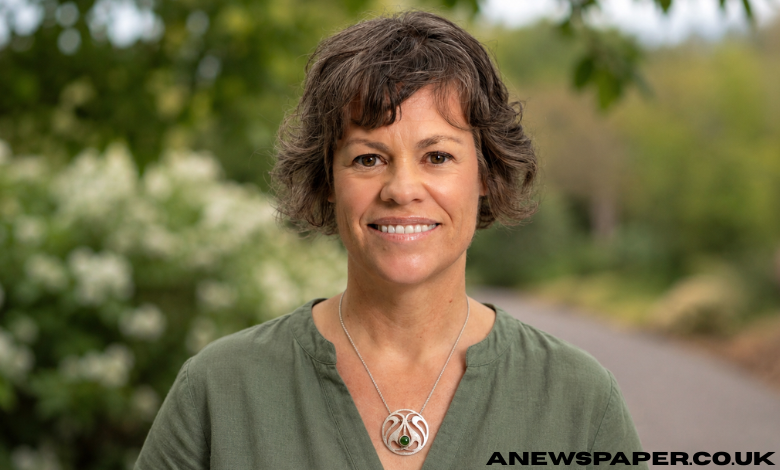
Lucy Mackintosh is a New Zealand historian, curator, researcher, and author whose work has contributed significantly to the understanding of Auckland’s historical landscapes, cultural heritage, and collective memory. She is widely recognised for her ability to connect people, places, and historical narratives through detailed research that goes beyond traditional historical records. Rather than viewing history as a collection of dates and events, Lucy Mackintosh examines how landscapes, communities, objects, and memories interact over long periods of time.
Her work has become particularly important in the study of Tāmaki Makaurau Auckland, one of New Zealand’s most historically significant regions. Through her writing, museum work, and academic research, she has helped readers understand the deep connections between land, Indigenous histories, colonial experiences, environmental change, and urban development. Her research demonstrates that history exists not only in archives and libraries but also in the physical environments people inhabit every day.
Among her most recognised achievements is the publication of Shifting Grounds: Deep Histories of Tāmaki Makaurau Auckland, a book that received widespread praise for its innovative approach to understanding Auckland’s past. The publication established her as an influential voice in New Zealand historical scholarship and public history.
Who Is Lucy Mackintosh?
Lucy Mackintosh is a scholar whose career bridges multiple disciplines, including history, heritage studies, museum curation, environmental history, cultural memory, and public engagement. She has built a reputation for examining historical questions from a broad perspective, combining archival evidence with material culture, landscape analysis, oral histories, and community knowledge. Unlike historians who focus exclusively on political events or biographies of notable figures, Mackintosh often studies the relationships between people and places. Her work investigates how landscapes carry traces of past experiences and how communities remember, interpret, and preserve those histories.
Her research frequently highlights the importance of Māori perspectives and Indigenous knowledge systems in understanding New Zealand’s past. By incorporating these viewpoints, she contributes to a more complete and balanced interpretation of historical events and cultural change. Over the years, Lucy Mackintosh has become respected not only within academic circles but also among heritage professionals, museum practitioners, educators, and readers interested in New Zealand history.
Early Academic Interests and Educational Background
Behind Lucy Mackintosh’s published achievements lies a long-standing commitment to academic research, historical inquiry, and professional development. Her interest in history emerged through a desire to understand how places evolve over time and how communities shape their environments. Her educational journey equipped her with the research methods necessary to investigate complex historical topics. These methods include archival analysis, interpretation of historical documents, material culture studies, and landscape-based research approaches.
What distinguishes her academic interests is the way she moves beyond written sources. Many historians rely heavily on official records, government documents, and published accounts. Mackintosh expands this approach by considering physical environments, cultural artefacts, maps, architecture, and community memories as valuable historical evidence.
This broader perspective has allowed her to uncover historical narratives that may otherwise remain hidden or overlooked.
Building a Career in History and Heritage
Lucy Mackintosh’s professional career spans several interconnected fields. She has worked in research, heritage management, museum curation, and public history projects, each contributing to her understanding of how societies remember and interpret the past. Her heritage work involves identifying, preserving, and interpreting places of historical significance. Heritage professionals often face the challenge of balancing conservation with modern development, particularly in rapidly growing urban areas such as Auckland. Mackintosh’s research has helped inform discussions about the historical value of landscapes and cultural sites.
Museum curation has also played an important role in her career. Museums serve as spaces where historical knowledge becomes accessible to the public. Through exhibitions and collections, curators help visitors connect with historical experiences in meaningful ways. By working across these different sectors, Mackintosh has demonstrated how historical research can extend beyond academic publications and contribute directly to public understanding.
Understanding Tāmaki Makaurau Auckland
Much of Lucy Mackintosh’s research is centred on Tāmaki Makaurau Auckland, a region with a rich and layered historical past. This region occupies a unique place in New Zealand history because of its long Māori settlement history, strategic geography, and role in colonial expansion. For many historians, Auckland’s history begins with European settlement in the nineteenth century. Mackintosh challenges this narrow timeframe by exploring much deeper histories that stretch back centuries before colonisation.
Her research highlights how the region’s volcanic landscapes, waterways, coastlines, and fertile soils influenced patterns of settlement, trade, agriculture, and cultural development. These environmental features shaped both Māori communities and later European settlers. Through her work, readers gain a more comprehensive understanding of Auckland as a place where natural history, Indigenous history, colonial history, and contemporary urban development intersect.
Shifting Grounds: Deep Histories of Tāmaki Makaurau Auckland
Lucy Mackintosh achieved widespread recognition through her book Shifting Grounds: Deep Histories of Tāmaki Makaurau Auckland. The publication is widely recognised as an important addition to the study of Auckland’s historical development. Rather than presenting a simple chronological account, the book explores how land, people, memory, and material culture interact across generations. Mackintosh examines the ways landscapes preserve evidence of human activity and how those traces can reveal stories about migration, settlement, conflict, adaptation, and change.
The book encourages readers to think differently about history. Roads, coastlines, parks, buildings, and archaeological sites become sources of historical knowledge rather than merely features of the modern environment. One reason for the book’s success is its ability to combine rigorous scholarship with accessible storytelling. Complex historical themes are presented in a manner that appeals to both academic audiences and general readers. The publication received critical acclaim and contributed significantly to public discussions about Auckland’s identity and heritage.
The Importance of Place-Based History
A defining feature of Lucy Mackintosh’s research is her commitment to place-based history. This approach starts with specific locations and investigates the layers of historical experience embedded within them. Place-based history recognises that landscapes are not passive settings where events occur. Instead, landscapes actively shape human experiences and retain evidence of those experiences over time. For example, a coastal area may reveal stories about traditional food gathering, trade routes, colonial settlement, environmental change, and modern urban development. Each historical layer adds to the complexity of the place.
Mackintosh’s work demonstrates that understanding these layers helps communities develop stronger connections to their local environments. It also encourages greater appreciation for cultural and historical heritage.
Researching Cultural Memory
Another major theme in Lucy Mackintosh’s career is cultural memory. Cultural memory refers to the ways societies remember and interpret the past through stories, monuments, traditions, commemorations, and shared experiences. Memory does not always align perfectly with historical evidence. Communities may emphasise certain events while overlooking others. Historians therefore play an important role in examining how memories are created, preserved, and transformed.
Mackintosh’s research investigates how historical narratives evolve over time and how different groups may remember the same place or event in different ways. This work is especially relevant in countries such as New Zealand, where multiple cultural traditions contribute to national identity. Understanding these different perspectives helps create more inclusive historical narratives.
Contributions to Museum and Curatorial Practice
Museum work has allowed Lucy Mackintosh to bring historical research into public spaces. Curators serve as interpreters between historical evidence and modern audiences. Through exhibitions, collections, and educational programmes, museums help visitors engage with history in tangible ways. Objects, photographs, maps, artworks, and artefacts provide opportunities for people to connect with the past beyond written texts.
Mackintosh’s expertise in material culture has been particularly valuable in this context. Material culture studies focus on the physical objects people create, use, and preserve. These objects often reveal information about daily life, cultural values, economic systems, and social relationships. Her curatorial contributions reflect a commitment to making history accessible, engaging, and relevant to contemporary audiences.
Environmental History and Landscape Change
Environmental history forms another important component of Lucy Mackintosh’s work. This field examines the relationships between humans and the natural environment over time. Auckland’s landscape has undergone significant transformation through urbanisation, infrastructure development, agriculture, and industrial activity. Understanding these changes requires consideration of both environmental processes and human decisions.
Mackintosh studies how natural features influence historical development and how human activities reshape landscapes. Her work reveals that environmental change is not simply a modern issue but a historical process with deep roots. By connecting environmental history with cultural history, she provides a more comprehensive understanding of how places evolve.
Public Engagement and Historical Education
One of Lucy Mackintosh’s strengths is her ability to communicate complex historical ideas to wider audiences. Public engagement has become an increasingly important aspect of historical practice because it helps ensure that research reaches communities beyond universities. Through writing, lectures, exhibitions, and public discussions, Mackintosh encourages people to explore the histories embedded within their surroundings.
Her work demonstrates that historical education is not limited to classrooms. Everyday environments can become opportunities for learning when people understand how to interpret historical evidence. This approach makes history more accessible and encourages active participation in heritage preservation.
Influence on New Zealand Historical Scholarship
Lucy Mackintosh’s contributions have influenced contemporary discussions about New Zealand history, heritage, and identity. Her research has encouraged historians to consider broader definitions of historical evidence and to recognise the importance of place, landscape, and memory. Her scholarship has also contributed to growing interest in interdisciplinary approaches to history. By combining methods from heritage studies, geography, environmental history, museum studies, and cultural analysis, she demonstrates how complex historical questions can be explored from multiple perspectives.
As a result, her work continues to inspire researchers, students, heritage professionals, and readers interested in understanding New Zealand’s past.
Legacy and Continuing Impact
Lucy Mackintosh’s career illustrates how history can be studied, interpreted, and shared in innovative ways. Her research challenges conventional understandings of historical evidence and encourages deeper engagement with landscapes, communities, and cultural memory. Through her writing, museum work, and heritage research, she has helped broaden public understanding of Auckland’s rich and layered history. Her emphasis on place-based history, Indigenous perspectives, environmental change, and cultural memory continues to influence both academic scholarship and public conversations.
As interest in heritage preservation and historical awareness grows, Lucy Mackintosh’s work remains highly relevant. Her contributions show that history is not confined to archives or textbooks. It exists in landscapes, objects, communities, and memories, waiting to be explored and understood.
Conclusion
Lucy Mackintosh has established herself as one of New Zealand’s respected historians, researchers, curators, and heritage specialists. Her work focuses on uncovering the deep histories of Tāmaki Makaurau Auckland by examining the connections between land, people, memory, and cultural change. Through projects in research, heritage management, museum curation, and authorship, she has expanded the ways history can be understood and communicated. Her award-winning book Shifting Grounds: Deep Histories of Tāmaki Makaurau Auckland remains a significant contribution to New Zealand historical scholarship. By exploring landscapes as living archives and highlighting diverse historical perspectives, Lucy Mackintosh continues to shape public understanding of heritage, identity, and the historical significance of place.