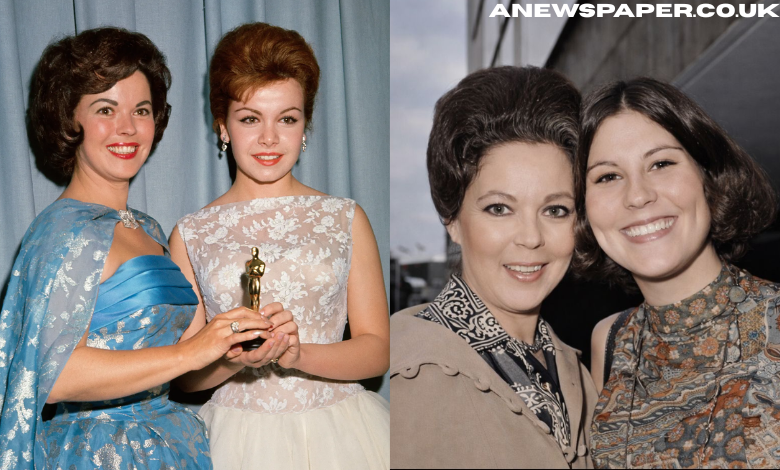
Linda Susan Agar, often recognized in adulthood as Susan Black, embodies a unique and understated story within American cultural history. Born into the glare of celebrity as the first child of Shirley Temple, one of Hollywood’s most iconic stars, Susan’s life unfolded in quiet contrast to her mother’s public persona. Unlike her mother, whose childhood was consumed by film sets and global attention, Susan grew up deliberately shielded from cameras and media scrutiny. Her story is one not of box-office achievements or public accolades, but of carving a meaningful, balanced life away from the limelight. It is a narrative of resilience, family dedication, and the careful cultivation of identity beyond the expectations that come with an iconic surname.
Early Life and Family Background
Linda Susan Agar entered the world on January 30, 1948, in Santa Monica, California. Her birth was significant not only for her family but also for the media, which treated her arrival as a continuation of Hollywood royalty. Her mother, Shirley Temple, was already regarded as “America’s Sweetheart,” and her father, actor John Agar, brought his own share of public recognition. Although born to famous parents, Susan’s childhood was deliberately kept separate from the demands and spotlight of the entertainment industry.
Shortly after her early years, Susan experienced a pivotal family transition when she was legally adopted into the Black household. This move was more than a legal formality—it marked a defining shift in her emotional and personal development. Susan grew up alongside her half-siblings, Charles Alden Black Jr., born in 1952, and Lori Black, born in 1954. In this household, the emphasis was placed on education, stability, and family values, a deliberate departure from the intensity and demands of Shirley Temple’s own childhood in the spotlight.
Life Away from Hollywood
Being the daughter of Shirley Temple carried a symbolic weight that could have influenced Susan’s choices. However, she remained purposefully distant from Hollywood’s red carpets, studio lots, and media attention. This distance reflected her mother’s determination that her children would not endure the same childhood pressures that defined her early career. Unlike Lori Black, Susan never pursued music, acting, or any public profession, choosing instead a life rooted in privacy and personal fulfillment.
Susan’s adulthood has been marked by consistency rather than public reinvention. Residing quietly in California, she has maintained a low profile, refraining from social media, commercial ventures tied to her family name, or public appearances. Her focus has been on family, personal development, and serving as a custodian of her family history. While she may not be visible in the public domain, her life illustrates the values of discretion, self-determination, and the quiet satisfaction of private accomplishment.
Identity and Personal Development
Despite growing up with fame as part of her lineage, Susan cultivated an identity independent of Hollywood expectations. This independence was supported by the protective environment of the Black household, where she was encouraged to pursue education and personal growth. She was provided the space to develop resilience, a sense of agency, and a grounded understanding of self that contrasted with the pressures experienced by her mother.
Her experience underscores an essential narrative about life in the shadow of fame: that true legacy is not solely about public recognition, but about how one chooses to navigate inherited identity and expectations. In Susan’s case, it meant defining success on her own terms, away from cameras, public judgment, or media scrutiny.
Public Perception and Media Coverage
Images of Linda Susan Agar are scarce, particularly from her adult years. Most publicly available photographs date back to her childhood or family events, often alongside Shirley Temple. Media coverage has generally respected her privacy, reflecting both her own choices and her mother’s influence. By avoiding visibility, Susan ensured that her personal achievements and family life remained shielded from public intrusion.
This contrasts sharply with the lives of her half-siblings or other celebrity children, many of whom pursued careers that drew media attention. Susan’s deliberate absence from the public eye emphasizes her commitment to a life of quiet stability and personal agency rather than the pursuit of fame.
Legacy and Family
While she has not sought public recognition, Susan’s legacy lies in her role as a guardian of family history and a symbol of resilience. Her approach to life demonstrates that personal fulfillment and contribution are not always measured by public achievements or commercial success. By maintaining a private and grounded life, she has preserved the values of stability, education, and identity for herself and her family.
Her story also provides a contrast to the pressures faced by celebrity children, illustrating that the choice to step away from fame can be a deliberate and empowering one. Susan’s life is a testament to the possibility of balancing heritage, personal choice, and family commitments in a world that often equates success with visibility.
Conclusion
Linda Susan Agar’s life narrative is a reminder that the impact of an individual is not defined solely by public visibility or celebrity. As Shirley Temple’s daughter, she could have followed a path of fame and public attention. Instead, she chose privacy, stability, and family as her guiding principles. Her story underscores the value of self-determination, resilience, and the deliberate shaping of identity, offering a quiet but meaningful chapter in the history of Hollywood families. Susan’s life, lived outside the glare of the spotlight, exemplifies the enduring importance of personal choice and family-centered living in defining one’s legacy.