Piragnia is a term that mostly shows up in online searches and digital content where its meaning is not clearly defined, and it is frequently mistaken for similar-sounding words or used casually as an informal keyword without any official recognition, which causes people to look it up again and again to figure out whether it represents a real object, a biological term, a fish species, or just a variation created through typing mistakes and repeated use across different internet platforms.
What is Piragnia
Piragnia is not a formally recognized scientific, linguistic, or technical term, and its meaning changes depending on where it appears, and in most cases it is either treated as a spelling variation of “piranha” or as a loosely used internet keyword that does not carry a stable definition, and because of this flexible usage, it is interpreted differently by different users depending on context rather than having a single verified meaning that can be found in standard references or academic sources. In many online cases, piragnia is used in place of the word piranha, especially when users make spelling mistakes or when automated systems generate text with slight variations, and in other cases it is simply used as a creative placeholder word in blogs or digital content where writers are experimenting with unique keywords, and this combination of accidental and This kind of intentional or repeated usage is what keeps the term circulating online, even when it has no clear origin or officially defined identity.
Piragnia as an Online Digital Term
Piragnia is often seen in digital environments as a flexible and unstructured word that does not belong to any official dictionary or scientific classification system, and instead it appears in online writing, search queries, and content creation spaces where it is used as a temporary label or invented term that helps generate curiosity, and in many cases it exists only because internet content tends to recycle unusual spellings and unfamiliar words that attract attention.
In modern content ecosystems, words like piragnia can gain visibility simply because they look unusual or unfamiliar, and once a few websites or posts start using them, even without meaning, search engines begin indexing them, which leads to more people clicking on them, and this repeated interaction slowly builds a digital footprint for the term, even though it does not represent a real-world object, scientific idea, or established concept in any formal system.
Piragnia as a Spelling Variation of Piranha
One of the most common explanations for piragnia is that it is simply a spelling variation or typing error of the word piranha, which refers to a well-known freshwater fish species, and this type of error is very common in digital communication because people often type quickly, rely on voice-to-text tools, or mishear words when they are spoken, which leads altered versions of the original term continue to be recorded and circulated online, gradually spreading across different platforms and user communities.
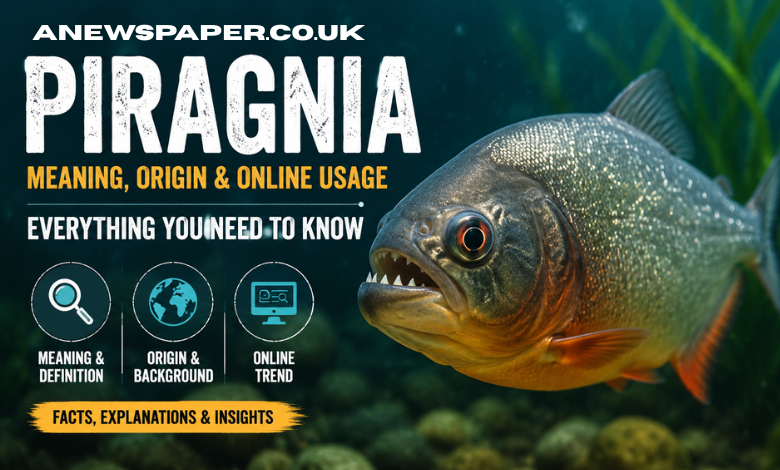
Piranhas are real fish found in freshwater rivers, mainly in South America, and they are known for their strong teeth structure and feeding behavior, which has made them widely discussed in biology and popular culture, and because this word is not always spelled or pronounced consistently by casual users, variations like piragnia naturally emerge and spread.
Why Piragnia is Getting Attention Online
Piragnia is gaining attention mostly because of repeated exposure rather than any actual scientific or cultural importance, and once users begin encountering the word in different places, they naturally search for its meaning, which increases search volume and creates the impression that it is something significant, even when it is actually just a product of repetition and curiosity-driven behavior on digital platforms.
This cycle is common in online environments where unclear or unusual words spread quickly, because one user’s confusion leads to another search, and that search behavior is tracked by algorithms that then suggest the term to more users, and over time this creates a feedback loop where piragnia appears more relevant than it really is, even though its origin is based on simple spelling variation or informal usage.
Piragnia in Search Behavior
Piragnia is typically searched by users who are trying to confirm whether it is a real word or just a mistake, and search engines respond to this by connecting it with similar terms such as piranha or related biological topics, which shows that the intent behind most searches is not to study a defined concept but to resolve confusion caused by encountering an unfamiliar or unexpected term online.
Search patterns also show that users often move from piragnia to piranha-related content once they realize the connection, which further confirms that the term itself does not hold independent meaning, but instead acts as a bridge created by spelling variation, and this type of search behavior is common in cases where internet users encounter words that look scientific but are actually incorrect or altered forms of existing vocabulary.
Difference Between Piragnia and Piranha
Piragnia is not officially recognized in any biological, scientific, or linguistic classification systems, whereas piranha is a well-documented freshwater fish species that is scientifically classified and studied within aquatic biology and established taxonomic frameworks, and this difference is important because it separates a real biological term from a non-standard variation that exists mainly in informal or digital usage.
Piranhas are known for living in warm freshwater environments and are often associated with rivers that have slow to moderate currents, and they are studied for their ecological role and behavior patterns, while piragnia does not represent any organism, species, or scientific category, and instead exists only as a miswritten or loosely used form that appears in online text without any biological or academic foundation.
How Piragnia Spreads in Digital Content
Piragnia spreads across digital platforms mainly through repeated copying, content recycling, and unverified writing, where users or automated systems replicate text without correcting spelling variations, and once a word enters this cycle, it can appear in multiple places even if it originally started as a simple typing mistake or informal variation.
Another reason for its spread is the way online content is optimized for search engines, where unusual or less competitive keywords are sometimes used to attract traffic, and in such cases, writers may intentionally or unintentionally reuse terms like piragnia without verifying their meaning, which increases the visibility of the word and reinforces its presence in search results and content databases.
Piragnia and Language Evolution on the Internet
Piragnia also reflects how language evolves in digital environments, where words do not always need formal approval or historical background to exist in usage, and instead they can emerge through typing errors, informal communication, or creative experimentation, and once they gain enough visibility, they start functioning as recognizable search terms even without official definitions.
This process shows how internet language is different from traditional language systems, because it is shaped more by user behavior and repetition than by dictionaries or linguistic authorities, and piragnia is an example of how quickly a non-standard word can become part of online conversation simply because it is seen, shared, and searched repeatedly across platforms.
Misunderstanding Around Piragnia
Piragnia is often misunderstood because users try to assign meaning to it based on appearance or similarity to known words, and this leads to assumptions that it might be a scientific term, a rare fish species, or a new concept in technology or digital culture, even though none of these interpretations are supported by verified sources or established references.
This misunderstanding is strengthened by the way information spreads online, where incomplete explanations are often shared without context, and once a misleading interpretation is published, it can be repeated by others, creating a chain of assumptions that makes the word seem more meaningful than it actually is, even though its origin remains simple and unstructured.
Piragnia in Modern Online Culture
Piragnia represents a pattern in modern online culture where unclear or unusual words gain visibility through repetition rather than meaning, and this shows how digital audiences interact with unfamiliar content by searching for it, sharing it across platforms, and discussing it repeatedly, which gradually increases attention toward terms that may not hold any real-world meaning or significance.
In this environment, curiosity itself becomes a driving force, because users are more likely to engage with something they do not understand, and piragnia fits into this pattern as a word that looks meaningful but lacks a stable definition, allowing it to circulate freely across different platforms and contexts without being tied to a specific idea or subject.
Conclusion
Piragnia does not have an official definition in science, language, or technical systems, and it is mostly understood as either a spelling variation of piranha or a loosely used internet keyword that has no fixed meaning, and its presence online is mainly driven by curiosity, repetition, and content circulation rather than any established origin or real-world reference. What makes piragnia interesting is not what it represents, but how it spreads and gains attention, showing how digital communication can turn simple spelling variations into widely searched terms, and how meaning in online spaces is often shaped by usage patterns rather than formal definitions or historical context.