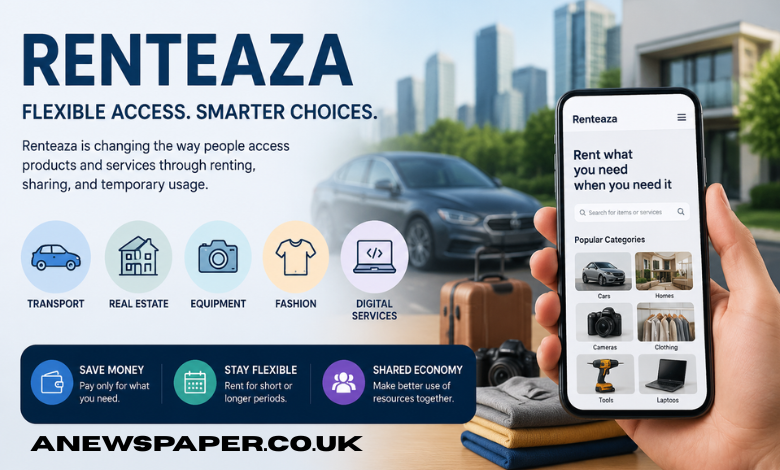
Renteaza is a concept built around temporary access to goods, services, or assets instead of permanent ownership. It reflects a growing shift in how people think about consumption, where flexibility and affordability matter more than long-term possession. Instead of buying items outright, users access what they need for a limited time. This could apply to housing, transport, equipment, clothing, or even digital tools. The idea is not new, but what has changed is the scale and the technology supporting it.
Digital platforms have made it easier to match people who own resources with those who need them temporarily. As a result, renteaza has become part of a broader system often described as the sharing economy.
What Renteaza Means in Practice
At its core, renteaza is a usage-based system. A person does not purchase an asset permanently. Instead, they pay for the right to use it for a specific time period. For example, someone might rent a car for a weekend instead of buying one. Another person may access office space for a few hours rather than signing a long-term lease. In both cases, the user gets the benefit of the asset without carrying the burden of ownership.
This approach works across different sectors:
- Transportation (cars, bikes, scooters)
- Housing (short-term rentals, vacation stays)
- Equipment (tools, cameras, machinery)
- Fashion (clothing rentals)
- Digital services (software subscriptions, cloud tools)
Renteaza is not limited to physical goods. It also applies to digital access models where users pay for temporary use instead of ownership licenses.
The Shift from Ownership to Access
For a long time, ownership was seen as a sign of stability. Buying a house, owning a car, or holding assets was considered essential for financial security.
That mindset is changing.
Modern users are more focused on flexibility. They prefer not to lock money into assets that lose value over time or require maintenance. Instead, they choose systems that allow them to pay only when they need something.
This shift is driven by several practical factors:
- Rising cost of living in many regions
- Limited space in urban environments
- Increased mobility in jobs and lifestyles
- Faster technological change making ownership less relevant
- Preference for minimal long-term commitments
Renteaza fits directly into this change by offering a more fluid way of accessing resources.
How the Renteaza Model Works
The renteaza system is built on a simple structure involving three main components:
1. Asset Owners
These are individuals or companies that own products or services. Instead of using them all the time, they make them available for temporary use.
2. Users (Renters)
These are people or organizations that need access to an asset for a limited period. They pay a fee based on time, usage, or demand.
3. Digital Platforms
Most modern renteaza systems operate through online platforms. These platforms handle:
- Listings of available assets
- Pricing systems
- Booking and scheduling
- Payments and transactions
- Trust and safety mechanisms
The platform connects supply and demand in real time, reducing friction and making access faster.
Why Renteaza is Growing Globally
The growth of renteaza is closely tied to broader economic and technological changes. The global shift toward the sharing economy has made access-based systems more acceptable and even preferred in many cases.
Several key drivers include:
Economic Pressure
People are more cautious about spending. Instead of buying expensive items, they prefer renting when possible. This helps reduce upfront costs.
Digital Transformation
Mobile apps and online platforms make it easy to rent almost anything within minutes. This convenience has accelerated adoption.
Urban Living
In cities, space is limited and expensive. Owning large assets is often impractical. Renting solves this problem.
Changing Work Patterns
Freelancers, remote workers, and gig economy participants often need short-term access to tools and spaces.
Environmental Awareness
Shared usage reduces waste and encourages efficient resource use. Many users see renting as a more sustainable option.
Industries Affected by Renteaza
Renteaza is not limited to one sector. It is reshaping multiple industries at the same time.
Transportation
Car rental services, bike-sharing platforms, and scooter rentals are common examples. Instead of owning a vehicle, users access transportation when needed.
Real Estate
Short-term rental platforms have changed how people travel and live temporarily. Long-term leases are no longer the only option.
Technology
Companies now rent software, servers, and cloud infrastructure instead of buying physical hardware.
Fashion
Clothing rental services allow users to wear high-end outfits without purchasing them.
Events and Business
Office spaces, meeting rooms, and event venues are increasingly rented on demand.
Benefits of the Renteaza System
The renteaza model offers several advantages for both users and asset owners.
For Users
- Lower upfront cost
- No long-term commitment
- Access to premium assets
- Flexibility to choose when needed
- Reduced maintenance responsibility
For Owners
- Additional income from unused assets
- Better utilization of resources
- Ability to reach more customers
- Scalable business opportunities
This balance makes the system attractive for both sides.
Challenges and Limitations
Despite its growth, renteaza also comes with challenges.
Trust and Safety
Users need confidence that the asset they are renting is reliable and properly maintained.
Pricing Complexity
Dynamic pricing can sometimes make costs unpredictable.
Regulation Issues
Different countries have different rules for rental-based services, especially in housing and transportation.
Dependency on Platforms
Most transactions depend on digital platforms, which creates centralization risks.
Quality Control
Ensuring consistent quality across rented assets can be difficult, especially in peer-to-peer systems.
The Role of Technology in Renteaza
Technology is the backbone of the renteaza ecosystem. Without digital systems, large-scale renting would be difficult to manage.
Key technologies include:
- Mobile applications for booking and management
- Payment gateways for secure transactions
- AI-based pricing systems
- Data analytics for demand prediction
- GPS tracking for logistics-based rentals
These tools make the system efficient and scalable.
Future of Renteaza
The future of renteaza is closely linked to how societies continue to evolve economically and technologically.
More industries are expected to adopt rental-based models. Subscription services are already replacing traditional ownership in many areas. This trend is likely to expand further.
Possible future developments include:
- Expansion into healthcare equipment rentals
- Growth of AI-driven rental marketplaces
- Increased automation in asset management
- Integration with smart city infrastructure
- More decentralized peer-to-peer rental systems
As digital systems improve, renting may become the default way of accessing many goods and services.
Conclusion
Renteaza represents a shift in how value is created and consumed. Instead of focusing on ownership, it prioritizes access, flexibility, and efficiency. The model is simple: use what you need, when you need it, without long-term financial pressure. Supported by digital platforms and changing consumer behavior, renteaza is becoming a major part of modern economic systems. Its growth shows that consumption patterns are no longer fixed. They are adapting to new realities where access is often more practical than ownership.