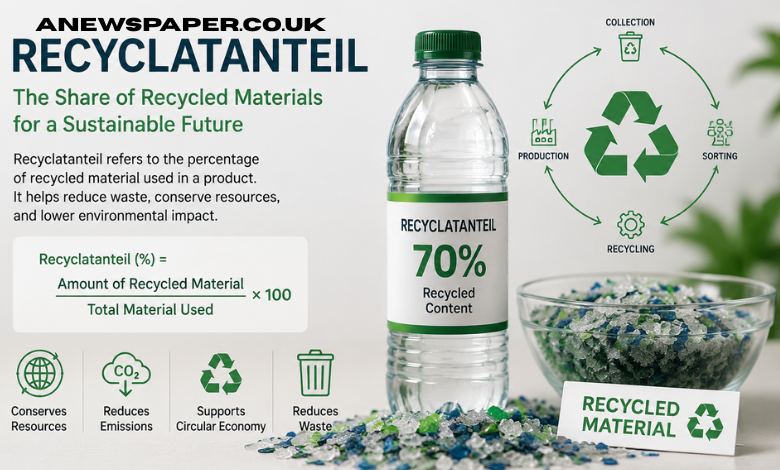
Recyclatanteil is a German term used in environmental science, manufacturing, and sustainability reporting. It describes the proportion of recycled material used in a product or production process. In simple terms, it measures how much of something is made from material that has already been used before, rather than newly extracted raw resources. The concept has become more important as industries and governments try to reduce waste, lower carbon emissions, and move toward circular production systems. Instead of continuously extracting virgin materials like oil, metals, or minerals, companies are now expected to reuse what already exists in the system.
Recyclatanteil is not just a technical measurement. It is increasingly used as a performance indicator for sustainability claims made by companies, especially in packaging, construction materials, automotive parts, and consumer goods.
What Recyclatanteil Actually Means
At its core, recyclatanteil refers to the percentage of recycled material included in a final product.
It can be expressed in a simple formula:
Recyclatanteil = (Amount of recycled material used / Total material used) × 100
For example, if a plastic bottle is made of 70% recycled plastic and 30% virgin plastic, then its recyclatanteil is 70%.
This seems straightforward, but in practice, measuring it is more complex. Different materials, supply chains, and recycling processes can affect how accurately this percentage is calculated.
There are also variations in definition depending on industry standards. Some companies measure recyclatanteil only based on pre-consumer waste (factory scraps), while others include post-consumer waste (used products collected after consumption). This distinction matters because post-consumer recycling is generally considered more environmentally meaningful.
Recyclatanteil vs Recycling Rate
A common misunderstanding is confusing recyclatanteil with recycling rate.
These two concepts are related but not the same:
- Recycling rate refers to how much waste is collected and processed for recycling.
- Recyclatanteil refers to how much recycled material is actually used in new products.
A country can have a high recycling rate but still a low recyclatanteil if recycled materials are not reused in manufacturing. For example, waste may be collected and processed, but if industries prefer cheaper virgin materials, the recycled output is not fully integrated back into production.
This difference is important because recyclatanteil reflects actual circular use of materials, not just waste collection efficiency.
Why Recyclatanteil Matters
The importance of recyclatanteil comes from the global pressure on natural resources and environmental systems.
1. Reduction of virgin material use
Virgin raw materials such as petroleum, iron ore, and bauxite are limited. Extracting them requires energy, land use, and often causes environmental damage. Increasing recyclatanteil reduces dependency on these materials.
2. Lower environmental impact
Producing materials from recycled sources generally uses less energy than extracting and refining raw materials. This leads to lower greenhouse gas emissions and reduced pollution.
3. Waste reduction
When recycled materials are reused in production, less waste ends up in landfills or incineration systems. This helps reduce environmental pressure on waste management systems.
4. Support for circular economy
A circular economy is based on keeping materials in use for as long as possible. Recyclatanteil is one of the key indicators of how well this system is functioning in practice.
Recyclatanteil in the Plastics Industry
The plastics industry is one of the main sectors where recyclatanteil is actively measured and promoted.
Plastic is widely used because it is cheap, flexible, and durable. However, it is also one of the largest contributors to environmental pollution when not managed properly.
In recent years, many companies have started using recycled plastics, often labeled as rPET (recycled polyethylene terephthalate) or rHDPE (recycled high-density polyethylene).
For example:
- Beverage bottles may contain 25% to 100% recycled plastic depending on brand and region.
- Packaging materials for household products increasingly include recycled content.
- Some companies commit publicly to increasing their recyclatanteil over time as part of sustainability targets.
However, challenges remain. Recycled plastic must meet strict hygiene and quality standards, especially for food and beverage packaging. This limits how much recycled material can be safely used in some applications.
Challenges in Increasing Recyclatanteil
Even though the concept is simple, increasing recyclatanteil in real-world systems is not easy.
1. Quality limitations
Recycled materials can sometimes be lower in quality than virgin materials. Repeated recycling can degrade properties such as strength, color, or purity.
2. Sorting and contamination
Waste streams are often mixed. If materials are not properly sorted, contamination can reduce the quality of recyclates. This makes it harder to use them in high-performance applications.
3. Cost factors
In some markets, virgin materials are still cheaper than recycled alternatives. This creates an economic barrier for increasing recyclatanteil.
4. Infrastructure gaps
Not all countries have advanced recycling systems. Without proper collection and processing infrastructure, high recyclatanteil cannot be achieved at scale.
5. Limited closed-loop systems
A closed-loop system is one where a product is recycled back into the same type of product (for example, bottles becoming new bottles). These systems are still limited in many industries.
Recyclatanteil in Policy and Regulation
Governments and international organizations are increasingly using recyclatanteil as part of sustainability regulations.
In Europe, for example, packaging laws are pushing companies to increase the recycled content in plastic products. Some regulations set minimum thresholds for recycled material in packaging by specific future dates.
These policies are designed to:
- Reduce dependence on fossil-based materials
- Encourage investment in recycling infrastructure
- Standardize reporting of recycled content
Companies are now required in many cases to disclose the recyclatanteil of their products, making sustainability claims more transparent and measurable.
Recyclatanteil in Construction and Automotive Sectors
While plastics are the most discussed area, recyclatanteil is also relevant in other industries.
Construction
In construction, recycled materials are used in:
- Concrete aggregates
- Steel production
- Insulation materials
Increasing recyclatanteil in construction helps reduce the environmental footprint of buildings, which are major contributors to global emissions.
Automotive industry
Car manufacturers increasingly use recycled metals and plastics in vehicle production. Interior components, insulation, and non-structural parts often contain recycled content.
This reduces material costs and supports sustainability targets set by automotive companies.
Measuring Recyclatanteil
Accurate measurement of recyclatanteil is important for reporting and compliance.
Common approaches include:
- Mass balance method: Tracks recycled content across supply chains
- Direct measurement: Calculates exact percentage in final product
- Certification systems: Independent audits verify recycled content claims
However, inconsistencies between methods can lead to different reported values for the same product.
Consumer Awareness and Market Demand
Consumers are becoming more aware of sustainability labels and environmental impact. Products with higher recyclatanteil are often marketed as more environmentally friendly.
However, consumer understanding is still limited. Many people confuse recycling rate, biodegradable materials, and recycled content.
Clear labeling and education are important to help consumers make informed choices.
Future of Recyclatanteil
The future of recyclatanteil is closely linked to technological development and policy enforcement.
Several trends are expected:
- Improved recycling technologies that increase material purity
- Stronger regulations requiring minimum recycled content
- Expansion of closed-loop manufacturing systems
- Digital tracking systems for material sourcing
Chemical recycling and advanced sorting technologies may also allow higher recyclatanteil in industries that currently struggle with material quality limitations.
Conclusion
Recyclatanteil is more than a technical measurement. It represents a shift in how materials are sourced, used, and reused in modern economies. By focusing on the percentage of recycled content in products, industries can move closer to a circular system where waste is reduced and resources are used more efficiently. While challenges remain in cost, quality, and infrastructure, the direction of global policy and industry development clearly shows increasing importance of recyclatanteil in the coming years. Understanding this concept is essential for anyone involved in manufacturing, environmental policy, or sustainability planning, as it directly reflects how effectively society is reusing its own material resources instead of relying on constant extraction.